
How Marine Collagen Supports Skin Health
If you’re building a complete anti-aging strategy (supplements + skincare + daily habits), start here: Unlock Youthful Skin: The Ultimate Guide to Natural Anti-Aging Products.
Jump to:
What Is Marine Collagen?
Marine collagen is a type of collagen sourced from the skin, bones, and scales of fish. It’s often considered highly bioavailable, making it a popular option for skin-support routines.
Marine collagen is usually Type 1 collagen, which is the primary collagen type found in human skin.
It’s rich in the collagen type most associated with skin structure and firmness.
The amino acid profile of fish collagen includes glycine, proline, and hydroxyproline. These amino acids are vital for collagen-related processes.
Marine collagen is often hydrolyzed into peptides, making it easier to mix and digest.
Benefits of Marine Collagen:
- Supports skin elasticity and hydration
- Promotes skin regeneration
- Rich in essential amino acids
Sustainability is another advantage of marine collagen. Many products use responsibly sourced fish byproducts to reduce environmental impact.
If you prefer capsules, you can explore: Multi Collagen Complex – Types I, II, III, V & X – 1800 mg (90 Capsules) .
Marine collagen may not be suitable for everyone. If you have a fish or seafood allergy, avoid marine collagen and consult a healthcare provider before use.
Want the best format for your routine? See our buyer guide: Collagen Gummies vs. Capsules.
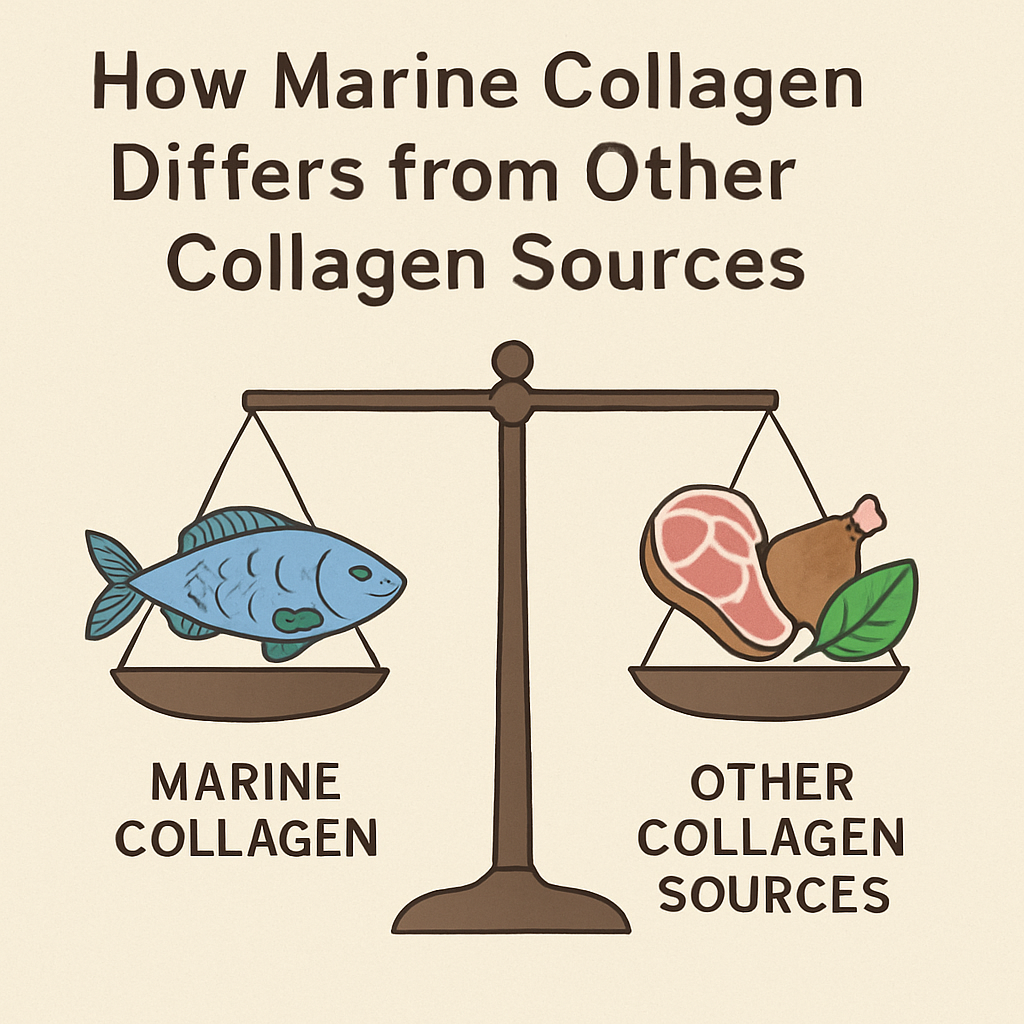
How Marine Collagen Differs from Other Collagen Sources
Marine collagen differs from bovine and porcine collagen mainly in source and peptide size, which can influence digestion and absorption.
It is predominantly Type 1 collagen, supporting skin, hair, and nail structure.
Its smaller peptides are often easier for the body to process than larger collagen molecules.
Key Differences:
- Source: Fish skin, bones, and scales
- Composition: Primarily Type 1 collagen
- Absorption: Smaller peptide size
The Science Behind Marine Collagen and Skin Health
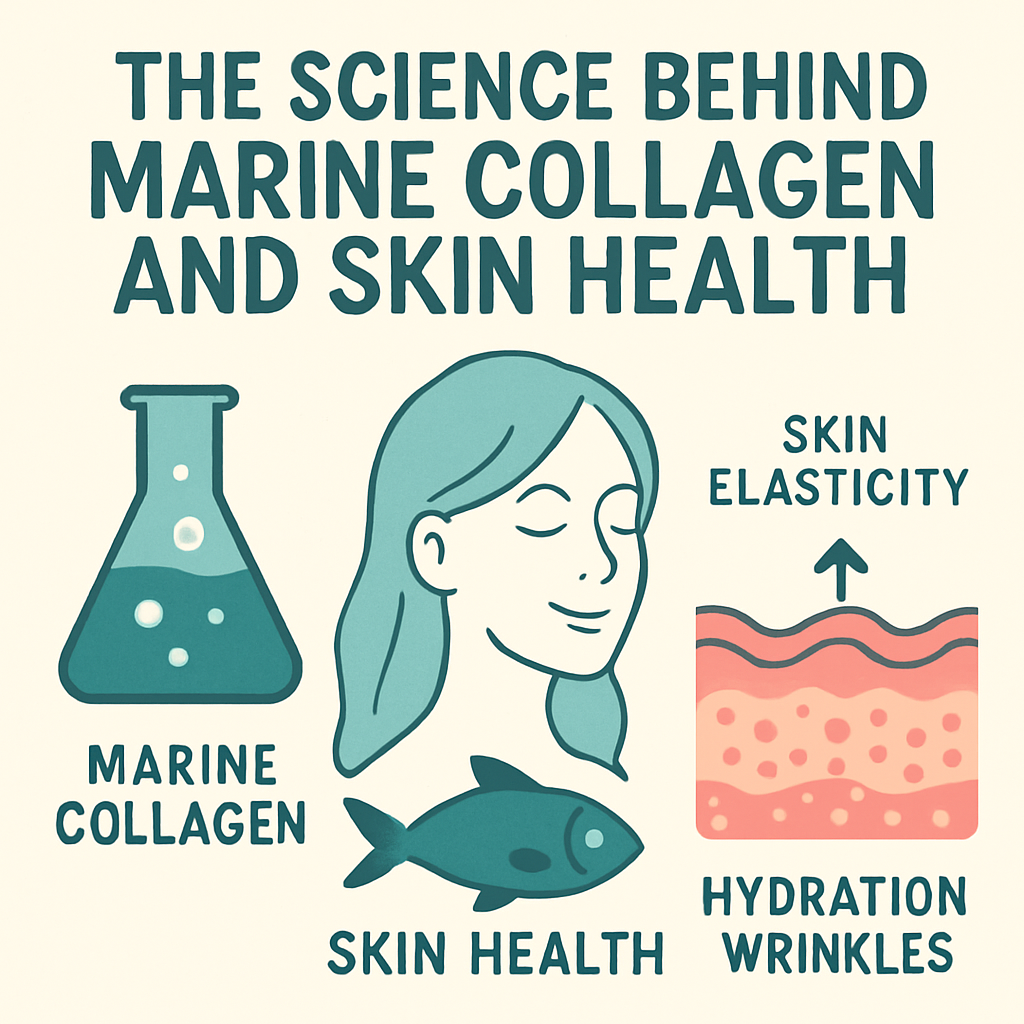
Marine collagen’s benefits are linked to its amino acid profile and peptide structure.
Glycine, proline, and hydroxyproline play central roles in collagen-related pathways.
Impact on Skin:
- Supports collagen production
- Supports elasticity
- Supports hydration habits
Hydrolyzed collagen is easier to digest. Most people evaluate results after 8–12 weeks of consistent use.
If you want realistic expectations, read: Collagen Protein: Myths and Facts Explained .
Marine Collagen Results Timeline
- 2–4 weeks: Improved hydration
- 6–8 weeks: Softer texture
- 8–12 weeks: More noticeable support
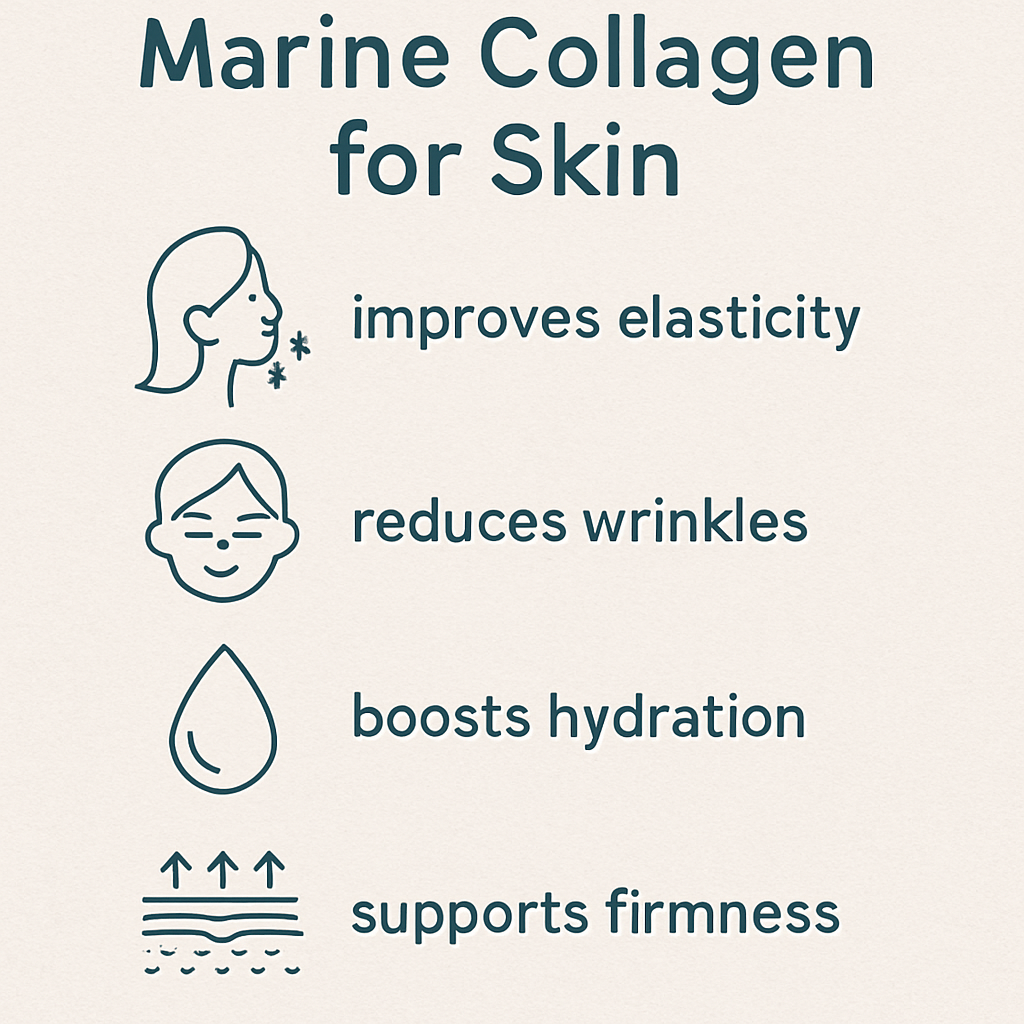
Key Benefits of Marine Collagen for Skin
Benefits are most noticeable with consistent use and supportive skincare habits.
Key Benefits:
- Supports elasticity
- Supports hydration
- Supports smoother texture
- Supports natural repair processes
Try our Skincare Routine Generator for a personalized plan.
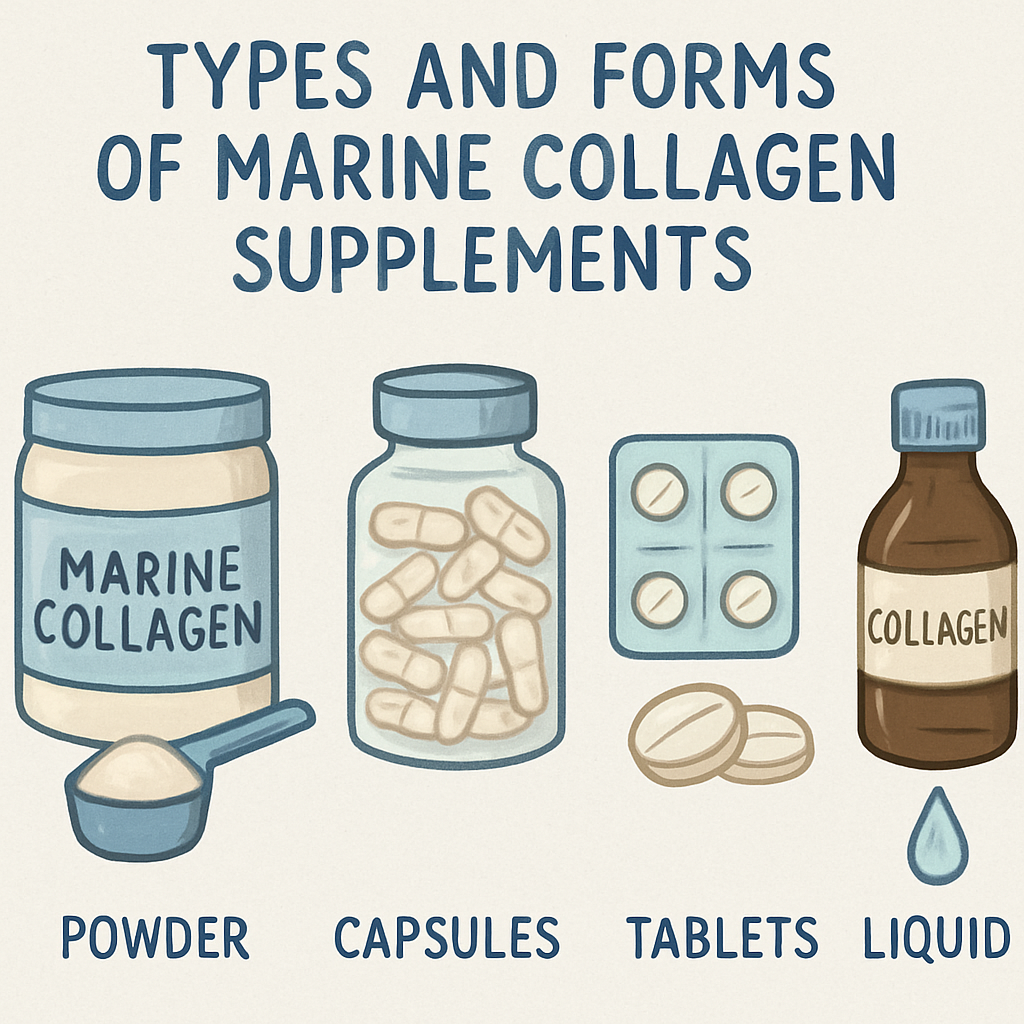
Types and Forms of Marine Collagen
- Powders: Mixable
- Capsules: Convenient
- Liquids: Fast intake
How to Choose the Best Marine Collagen
Choose products based on quality, sourcing, processing, and transparency.
- Wild or responsibly sourced fish
- Minimal fillers
- Hydrolyzed peptides
- Third-party testing
How to Use Marine Collagen
- Take daily
- Mix powders into drinks
- Follow label directions
Safety and Side Effects
- Avoid if allergic to fish
- Consult during pregnancy
- Ask your provider if unsure
FAQs
- How long does it take? 8–12 weeks
- Is hydrolyzed better? Often easier to digest
- Can I combine with skincare? Yes
Key Takeaways
- Marine collagen is rich in Type 1 collagen
- Hydrolyzed peptides are easier to use
- Consistency matters most
- Use internal guides for format decisions
Next step: Build your routine with our Skincare Routine Generator.